
IRTG NEWS
IRTG Travel Grants Programm – Report Eighth International Symposium on Arctic Research 2025 (Moritz Zeising)
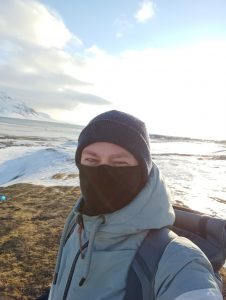
Imagine a map of the Arctic Ocean: Most likely, you picture a map with the Fram Strait centered as the main gateway, bordered by Greenland and the Canadian Archipelago to the left, and the Nordic Seas and the Russian shelves to the right. This is also how I approached my research and defined the regions of major importance, especially since the Fram Strait represents the area where most in-situ samples are collected to be used for my model evaluation. However, the Japanese/Asian perspective can be quite different: the Bering Strait and the Chukchi Sea are the areas most frequently visited and sampled by Asian research vessels. Thus, I was curious to learn more about the perspectives of Japanese and other Asian colleagues and to foster some collaborations in that region. ISAR-8 spanned a wide range of disciplines, natural sciences, of course, but also talks, posters, and performances from social scientists, indigenous researchers, and policy advisers. Have you ever considered that you might be using indigenous words in your research brought into science by colonialism? Have you ever engaged in co-creation with local communities and developed your research questions together with local stakeholders? Have you ever incorporated non-Western knowledge systems into your analysis? As a biogeochemical numerical modeler working in the Fram Strait, I didn’t really see how to do so, until some presentations at ISAR-8 where, e.g., indigenous and local knowledge and observations were incorporated in ocean biogeochemistry models. This might remind some of you of the Arctic Science Summit Week organized by IASC, which also broadens the perspectives on the Arctic through multi- and transdisciplinary approaches. I miss these approaches in the (AC)³ community. In my opinion, there could also be much more discussion within (AC)³ on how we could increase the relevance of our research for communities and society, and on the ethical and cultural dimensions of how we conduct our work in the Arctic. The ISAR-8 organizing committee did a good job in structuring the plenary sessions, keynote talks and networking events to ensure, that the attendees were exposed to thoughts and ideas outside their usual bubble. With the support from the Tokyo-Hachioji tourism fund, the conference also offered some glimpses into Japanese culture and cuisine. However, it was sometimes really difficult to communicate with Japanese researchers because of language barriers. When words fail, origami can certainly help: try out this origami globe generator displaying your individually created ocean temperature data set: https://ads.nipr.ac.jp/handmadeEarth/origami.
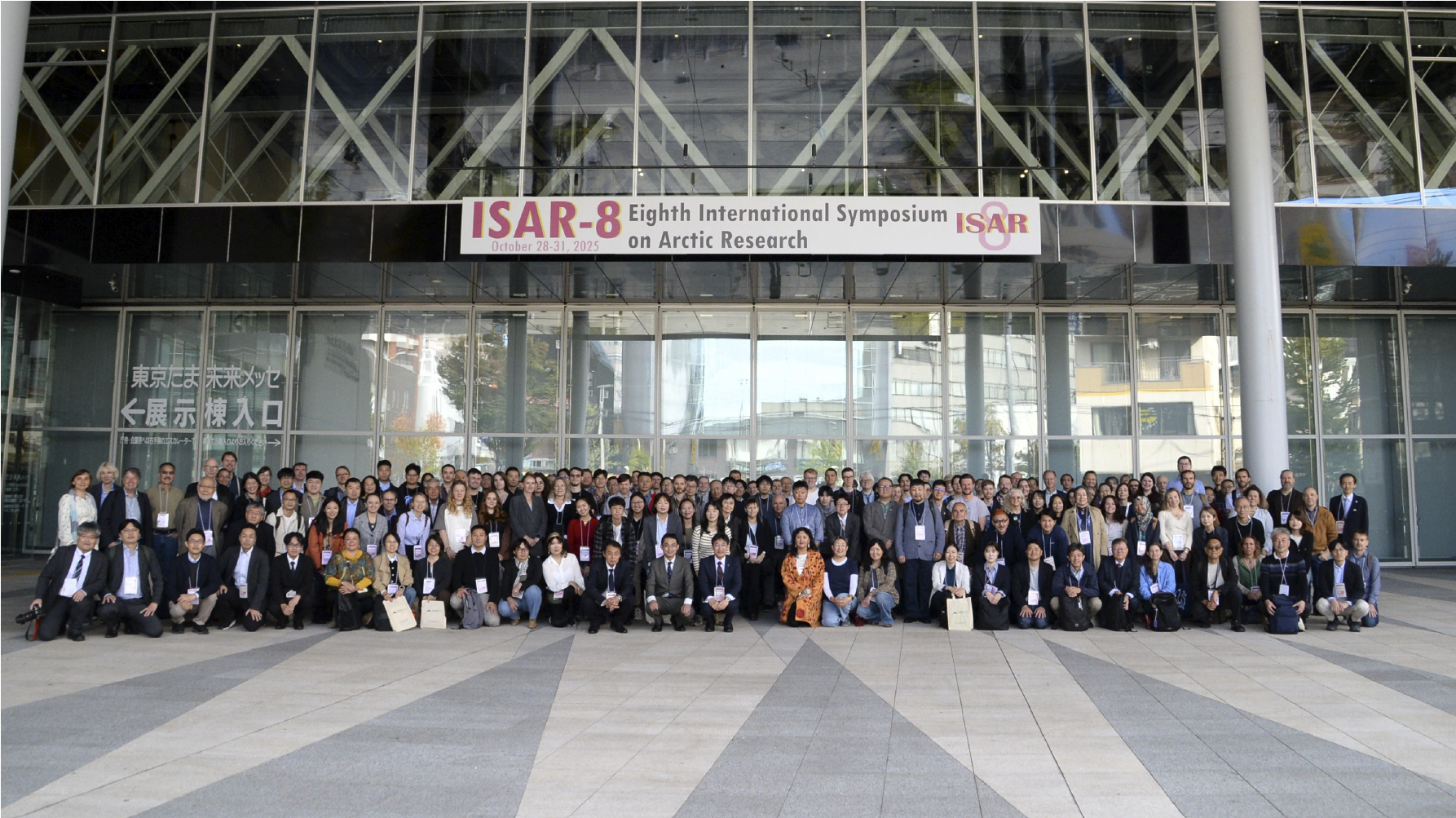
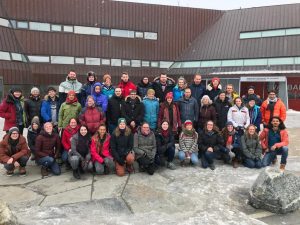
Group picture of all participants of the Eighth International Symposium on Arctic Research.
Published: 2025-11-01
By: Christa Genz
IRTG Travel Grants Programm – Report ERCA 2025 (Swetlana Paul)
IRTG Travel Grants Programme
PhD researcher Swetlana Paul joined the European Research Course on the Atmosphere (ERCA) in Grenoble, France
In January 2025, I had the opportunity to attend the European Research Course on the Atmosphere (ERCA) in Grenoble, France. The winter school was organized by an international team of atmospheric researchers and lasted two weeks. The associated events were held at the Institute of Environmental Geosciences (IGE) on the campus of the Université Grenoble Alpes (UGA). My attendance was made possible by the travel grant provided by the IRTG.
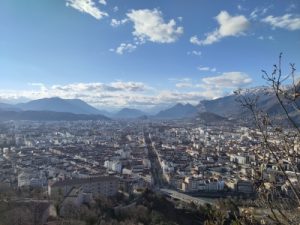
Photo: Swetlana Paul
The days usually started with lectures that covered a broad range of topics associated with atmospheric sciences, such as the role of aerosols, atmosphere-ocean interactions and paleoclimatology, to name a few. The talks were complemented by tutorials on statistical analysis, neural networks, scientific writing and science communication.
The afternoons were devoted to project work, during which each student was working on a topic individually chosen by them using the school’s computational infrastructure as well as supporting material such as observational and reanalysis data. The project work was carried out in small groups, each one under the guidance of an experienced researcher. I was able to use the project time to explore CALIOP lidar data, thereby benefiting from the support provided by the group leader.
The program also included presentations and panel discussions on the societal context of atmospheric and climate research, which gave the participants the chance to talk to ECMWF representatives and researchers who were involved in the writing of IPCC reports, among others. Gaining insights into the interplay between science and policymaking and discussing the role of atmospheric scientists in a world facing global warming with both experts and fellow PhD’s was a great experience.
The course provided a lot of room for scientific exchange. It was a pleasure to speak to early-career scientists from a multitude of cultural and topical backgrounds and to get to know PhD students who work on topics related to mine. The poster session was a helpful exercise in presenting. At the same time, it provided room for informal discourse among the students. Spending two weeks with leading environmental researchers was an invaluable opportunity to learn from and discuss with them and to extend one’s scientific network.
Overall, the ERCA team managed to create a very welcoming, open and supportive atmosphere that I highly appreciated and that I benefited a lot from.
A list of all funded travel grants can be found on the IRTG page here.
Published: 2025-01-19
By: Christa Genz
IRTG Travel Grants Programm – Report AOSCM training (Fan Wu)
IRTG Travel Grants Programme
PhD researcher Fan Wu went to a Technical training for running simulations with the AOSCM in Stockholm, Sweden
My PhD project on “The effect of thermodynamic and radiation profiles on the LRF in the Arctic ABL” involves comparing simulation output to observational data, as it was determined in a previous phase of (AC)³ that interpretation of observations would greatly benefit from a modeling component. Thus, I spent two weeks working with members of the Stockholm University’s Department of Meteorology (MISU) who had already spent several years working with the relevant model – the AOSCM. While there, I was firstly introduced to MISU’s supercomputer system, Tetralith. I will later compile my own version of the model on Tetralith’s server as well as extract the input data files for my simulations with the data extraction script that will run on that server. It was explained to me what running a simulation entails. I learned what exactly is in the input file that is used to initiate the force model simulations. The available terms of the file can be adjusted via the namelist, which tells the model which terms are turned on for that simulation. Once input step is complete, the actual running of the simulation was taught. The output files were downloaded and interpreted via Python notebooks provided by my MISU colleague. I first worked using a case study from a previous workshop held by my MISU colleague. Once that was complete, I was able to get my own input file for a scenario from my PhD project and ran the simulation several times independently in order to become familiar with running simulations. The goal of the visit was to learn how to run simulations with the AOSCM and to set up an environment on my personal work computer where I can then run simulations from Leipzig. Both those goals were reached, as I successfully ran the AOSCM while still in Sweden as well as set up access on my work computer to the version of AOSCM that was precompiled on MISU’s server. Since returning to Leipzig, I have successfully ran three of my own simulations for my project and presented the results to my supervisors. I now have the basic tools I need to run simulations for my project and contacts among the people at MISU should any further questions arise. After our training, we still meet semi-regularly online as there are constantly updates regarding the model or working with the model. I look forward to collaborating with them throughout my PhD and hope to be able to contribute my own insight to their team one day. Next, I will look into learning about the AOSCM and its input and output on a deeper level so that I can gain a more expert understanding.
A list of all funded travel grants can be found on the IRTG page here.
Published: 2024-12-19
By: Christa Genz
IRTG Travel Grants Programm – Report ICCP 2024 (Nina Maherndl)
IRTG Travel Grants Programme
PhD researcher Nina Mahernd joined the ICCP conference 2024 in Jeju, South Korea
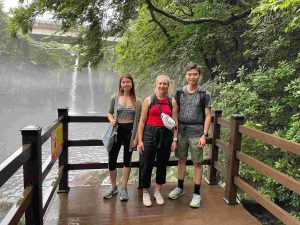
Thanks to the (AC)³ IRTG Travel Grant, I had the opportunity to attend the International Conference on Clouds and Precipitation (ICCP). ICCP 2024 was hosted by the Korean Meteorological Society (KMS) and the Korean National Institute of Meteorological Sciences (NIMS) and was held at the International Convention Center JEJU from 14 to 19 July. I was one of over 500 participants from more than 40 countries who visited the existing location of the South Korean island Jeju.
The conference covered a wide range of topics in clouds and precipitation, including aerosol-cloud interactions, ice nucleating particles, ice multiplication processes, orographic clouds, and polar clouds. The sessions on mixed-phase clouds were of particular interest to me. Personally, I found the discussions on secondary ice production enlightening. There is still a lot of discussion on this topic, with different experts disagreeing on how important SIP is compared to primary ice production, and which SIP processes are relevant in different types of clouds. There are many unknowns waiting to be explored through research.
On Monday, I presented a poster on my forthcoming paper on how riming affects the spatial variability of ice water in mixed-phase clouds. To my delight, my poster was well attended and generated many discussions. I talked with interested colleagues well past the scheduled time. I especially enjoyed the discussions with Timothy Juliano (NCAR), who plans to investigate the spatial variability of ice water in similar clouds using LES.
Our host did an excellent job of organizing and making us feel welcome. After complaints about the lack of vegetarian food at lunch on Monday, there was a separate vegetarian buffet starting on Tuesday with almost as many choices as the omnivore buffet. I enjoyed the usual conference-related social activities such as joint dinners with colleagues and took the opportunity to visit a Buddhist temple on Wednesday afternoon, when we had free time. I reconnected with Brian Lo and Rosie Mammatt from the University of Reading, whose group I visited in March of this year. It was good to see Matt Shupe and Gabriella Wallentin again. I also really enjoyed conversations with Martina Krämer (Gutenberg University Mainz) and Corinna Hoose (KIT).
I enjoyed my stay in Jeju, which I probably would never have visited if I had not been given this opportunity. Attending the ICCP gave me many new ideas for my research and opportunities to network and collaborate with colleagues in my field.
A list of all funded travel grants can be found on the IRTG page here.
Published: 2024-07-14
By: Christa Genz
IRTG Travel Grants Programm – Report IRS 2024 (Hanno Müller)
IRTG Travel Grants Programme
PhD researcher Hanno Müller joined the IRS 2024 in Hangzhou, China
The (AC)³ IRTG travel grant gave me the opportunity to attend the International Radiation Symposium (IRS) in Hangzhou, China in June 2024. The IRS 2024 was jointly organized by the School of Earth Sciences at Zhejiang University and the International Radiation Commission (IRC) of the International Association of Meteorology and Atmospheric Sciences (IAMAS).
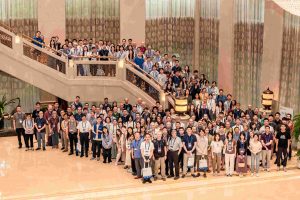
Group foto of conference members.
The symposium covered a wide range of interesting topics from radiative transfer theory and ground-based measurements and field observations to weather, climate and environment applications. Several keynote speakers gave insights into current problems in atmospheric radiation, including Bernhard Mayer who introduced new approaches towards 3D radiative transfer in numerical weather prediction models and Warren Wiscombe who presented his personal experience in atmospheric radiation from 1970 to 2013. On Monday, I gave a talk on the evaluation of solar irradiances simulated by the Integrated Forecasting System of ECMWF using Airborne Observations from the ACLOUD campaign by (AC)³. On Wednesday, I presented a poster for my colleague Sebastian Becker on contributions of surface and cloud variability to the contrast of solar surface cloud radiative effect between sea ice and open ocean in the Arctic. Both the talk and the poster initiated a fruitful discussion with colleagues in my field and resulted in new ideas for my future work. Towards the end of the week, the hosts of the IRS 2024 organized a symposium dinner, during which Jake Gristey was awarded with the IRC Young Scientist Award and Manfred Wendisch was announced as the successor to Peter Pilewskie as IRC president. I am thankful to the (AC)³ IRTG travel grant for giving me the opportunity to attend the symposium.
A list of all funded travel grants can be found on the IRTG page here.
Published: 2024-06-17
By: Christa Genz
IRTG Travel Grants Programm – Report AGU 2023 (Andreas Walbröl)
IRTG Travel Grants Programme
PhD researcher Andreas Walbröl joined the AGU fall meeting in San Francisco, USA
With the (AC)³ IRTG Travel Grant, I had the opportunity to visit the largest Geoscience Conference in the world, the AGU Fall Meeting 2023. The conference took place at the Moscone Center in San Francisco (USA) from 11 to 15 December 2023. A mixture of oral, poster and e-lightning sessions across a wide field of topics (atmosphere, remote sensing, geophysics, cryosphere, informatics, …) on each day resulted in a busy schedule.
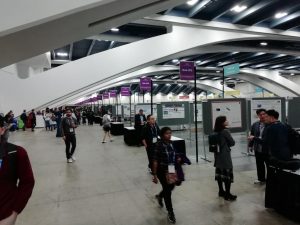
I had new insights about research related to the changing Arctic climate which was conducted outside of (AC)³. It was fascinating to see the improvements of observational systems. For example, a single-photon-counting lidar capable to observe clouds at submeter resolution was introduced. Also combinations of differential-absorption-radar and –lidar for improved water vapour profiling inside and outside of clouds were presented. Machine learning approaches for various problems were quite prominent in different fields. For example, I learned that image-post-processing ideas with Neural Networks can enhance the vertical resolution of retrieved temperature and humidity profiles. Physical and machine learning techniques are combined for computational efficiency while being physically consistent and having error estimates at the same time.
At my poster, I had a nice discussion with one of the developers of the MERRA-2 reanalysis (Richard Cullather) about the biases of water vapour in the central Arctic. I will stay in contact with him for my upcoming publication on the evaluation of water vapour products of reanalyses (and satellites) in the central Arctic.
All in all, the AGU Fall Meeting 2023 was a great event to get to learn about new machine learning methods for remote sensing and get to know the current state of research in atmospheric physics, environmental sciences, and of course many more fields.
A list of all funded travel grants can be found on the IRTG page here.
Published: 2023-12-11
By: Christa Genz
IRTG Travel Grants Programm – Report GA 2023 (Gabriella Wallentin)
IRTG Travel Grants Programme
Associated PhD researcher Gabriella Wallentin joined the |ac3| PhD Alumni Day and the |ac3| General Assembly in Leipzig
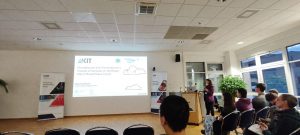
The main objectives for my attendance at the (AC)³ General Assembly was to share my expertise with the ICON microphysics applied to the Arctic environment and to get feedback on my current work. Presenting at the assembly was a very nice experience, I received some specific questions from non-modellers that indicate that I was able to convene information to people not used to the model, which was one of the objectives of mine. I believe the gap between modellers and experimentalists is too large and I would like for modellers to explain more about how the model works instead of simply showing results. Some more challenging questions were also posed and I am already looking into these for the implementation in the paper I am currently writing. After my talk the evening continued with discussions about the ICON model and the set-up limitations, as always, a very useful and informative discussion with some of the (AC)³ peers.
A list of all funded travel grants can be found on the IRTG page here.
Published: 2023-12-04
By: Christa Genz
IRTG Travel Grants Programm – Report Symposium on Polar Science - Japan 2023 (Alexander Mchedlishvili)
IRTG Travel Grants Programme
PhD researcher Alexander Mchedlishvili joined the 14th Symposium on Polar Science and the Hokkaido University in Japan for a research exchange
With support from the (AC)³ IRTG Travel Grant, I was able to go to Japan for a conference and brief research stay, giving me an opportunity to take a glimpse into a completely different scientific environment while I was there.
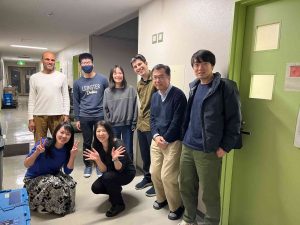
My time in Japan was divided between attending the The 14th Symposium on Polar Science and a brief research stay at the Institute of Low Temperature Science, Hokkaido University. The former was a great chance to meet experts in Polar sciences that were previously unknown to me. The sessions I attended dealt with sea ice, atmosphere and ocean physics as well as glaciology. I met researchers from the National Institute of Polar Research, the Japan Aerospace Exploration Agency (JAXA) as well as universities across Tokyo that dealt with sea ice. Discussions with them gave me further insight in my own project, especially after having given my talk on my pan-Arctic drag coefficient estimate retrieval. With this presentation, I believe I also gave (AC)³ more visibility in Japan and perhaps opened up possibilities of further collaboration between Germany and Japan in the future.
The latter part of my time in Japan consisted of a research stay at Hokkaido University. There, I was welcomed by my host, Dr. Takenobu Toyota, who is a sea ice remote sensing expert. I had the pleasure of exchanging details on our respective work as well as discussing potential collaborations in the future. In addition, I got to meet others in the group, including Master’s students eager to learn more about Polar science and continue their scientific careers. Overall, Dr. Toyota managed to make my stay there very pleasant despite it being a very short research stay. I especially enjoyed the tour of the Institute of Low Temperature Science where I got to see their cold rooms that are used for ice core section microscopy, as well sea ice experiments in tubs that can induce motion in the water to replicate rough water sea ice formation. Lastly, I had the pleasure of presenting at their weekly seminar during which time I introduced to the group there my work as well as NASA’s ICESat-2 laser altimeter satellite and its applications.
A list of all funded travel grants can be found on the IRTG page here.
Published: 2023-11-14
By: Christa Genz
IRTG Travel Grants Programm – Report IGE Grenoble 2023 (Anisbel Léon)
IRTG Travel Grants Programme
PhD researcher Anisbel Léon joined the SeaIce2Clouds workshop and the Institute of Environmental Geosciences (IGE) in Grenoble for a research exchange
My research exchange at the Institute of Environmental Geosciences (IGE) (6-8 Sept 2023) and my participation in the SeaIce2Clouds workshop (11 and 12 Sept 2023) in Grenoble, France was a great opportunity to meet many people in person and expand my network connecting with others working on Arctic research.
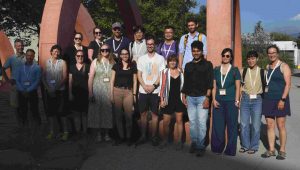
Group picture from SeaIce2Clouds workshop in Grenoble
I was invited to present my work on multiple occasions with active discussions with a diverse group of experts on modeling sea spray aerosol emissions (Remy Lapère from IGE) and aerosol-cloud interaction processes (Louis Marielle from LATMOS). There was also room for an exciting debate about recent measurements of marine organic aerosol from open ocean and leads in the Arctic led by Kerry Pratt from the University of Michigan.
I also learned from the presentations and general discussions during the workshop. SeaIce2Clouds SCOR group aims to bring sea ice and atmospheric scientific communities together to tackle open questions about ocean, sea ice, snow, and atmosphere coupling, with emphasis on gases and aerosol exchange processes in polar regions. For about two years I have been part of the group and involved in a synthesis paper on primary aerosols over polar regions. It was very nice to finally meet in person most of the people that are part of this group. The workshop aimed to have an open debate about the progress of the paper and to develop plans for modeling projects engaging modelers and the community in future observational planning.
Despite the brevity of my visit, I must say it was very beneficial to move forward with my research with extra motivation. Many scientists showed themselves interested in my work with some invitations to collaborate, mostly in process representation of organic aerosol emissions and aerosol-cloud interaction in models.
A list of all funded travel grants can be found on the IRTG page here.
Published: 2023-09-10
By: Christa Genz
IRTG Travel Grants Programm – Report AMS Radar Conference Minneapolis (Nina Maherndl)
IRTG Travel Grants Programme
PhD researcher Nina Maherndl presented her research at the 40th AMS Radar Conference in Minneapolis
Thanks to the (AC)³ IRTG Travel Grant, I was able to travel to Minneapolis (USA) to present my research at the 40th AMS Radar Conference. From August 28th to September 1st the AMS radar community met to discuss cutting-edge (radar) science under the theme “Leveraging Current and Emerging Radar Technologies to Pave the Way Toward New Discoveries and Capabilities” after a two-year delay due to the pandemic. The program consisted of 28 oral sessions, three formal poster viewings, six keynote presentations, and an (all female) panel discussion. Since one of the nine conference themes was “Microphysical Studies with Radar”, my research on riming during HALO-(AC)³ using airborne radar and in situ data fit right in.
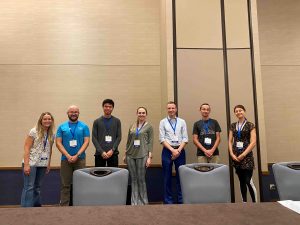
Awardies of the student prizes during the 40th AMS Radar Conference, Minneapolis
t was nice to see Brian Lo, a PhD student from the University of Reading, again. I also got to meet a lot of new people – scientists at all career stages – during the icebreaker event on Monday evening and throughout the rest of the week. I especially enjoyed conversations and discussions with Annakaisa von Lerber (Finnish Meteorological Institute), Kamil Mroz (University of Leicester), Lynn McMurdie (University of Washington), and Troy Zaremba (University of Illinois).
I am proud to say that I won one of the student prizes, which were awarded to seven out of 80 student presentations. My talk “Airborne Observations of Riming in Arctic Mixed-Phase Clouds during HALO-(AC)³” won first place in oral presentations.
I thoroughly enjoyed my stay in Minneapolis and am looking forward to implementing new ideas now that I am back in Leipzig. Attending the 40th AMS Radar Conference has definitely helped to advance my research project.
A list of all funded travel grants can be found on the IRTG page here.
Published: 2023-08-28
By: Christa Genz
IRTG Travel Grants Programm – Report AWI Potsdam 2023 (Melanie Lauer)
IRTG Travel Grants Programme
PhD researcher Melanie Lauer joined her |ac3| project fellows in Potsdam
My name is "Watschel", and I have the pleasure of supporting Melanie during the last months of her PhD. As Melanie is writing her PhD thesis, I offered to tell you about her research stay at the Alfred-Wegener Institute (AWI) in Potsdam.
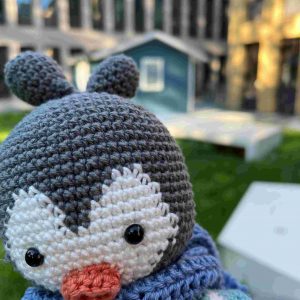
Photo: Melanie Lauer
In August, Melanie came for five weeks to Potsdam to work on two main tasks: writing her Ph.D. thesis and working on the climatological study about the influence of different weather features (like atmospheric rivers, cyclones, and fronts) on precipitation in the Arctic. As I come from Antarctica, I was very interested in Melanie’s topic. However, as I am not an expert in this field, Melanie had the opportunity to discuss her current state of the Ph.D. thesis, as well as her new results for the climatological study with Annette and Sofie. The meetings were very helpful and constructive and helped Melanie to shape the structure of her Ph.D. thesis. Also, the discussions about her current results related to the climatology of atmospheric rivers, cyclones, and fronts and their influence on precipitation were very interesting. During her last week, she had also the possibility to join two group meetings. In one of them, she had the possibility to present her research to a wider audience. The people were very interested in Melanie’s research and asked some questions. Back in Cologne, Melanie is now finalizing her results and she is optimistic that a draft for her second paper will be ready end of October.
Finally, it was a wonderful opportunity for Melanie to go to Potsdam to meet Annette, Sofie, Lars, other (AC)³ people, new faces, and Einstein (a cat living on Telegrafenberg). The research stay helped a lot to improve the structure of the Ph.D. thesis, to find a focus for the second paper, and to strengthen the relationship within the E04 project. Apart from research, we had the possibility to explore the Telegrafenberg, and Potsdam with its beautiful lakes (possibility of kayaking and swimming) and parks. This helped a lot to clear the head.
A list of all funded travel grants can be found on the IRTG page here.
Published: 2023-08-07
By: Christa Genz
IRTG Travel Grants Programm – Report ASOF Conference Las Palmas (Finn Heukamp)
IRTG Travel Grants Programme
PhD researchers Wiebke Körtke, Zerlina Hofmann and Finn Heukamp presented their research at the Arctic-Subarctic Ocean Fluxes (ASOF) conference in Las Palmas
What at first glance looked like sea ice on the ocean (out of the plane) fast turned out to be the whitecaps of waves. Which is, of course, much likelier at the location we headed to – Las Palmas de Gran Canaria. However, the sea ice would have fitted better to the conference topic: Arctic-Subarctic Ocean Fluxes (ASOF).
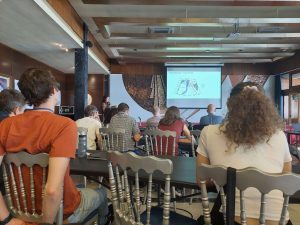
Zerlina giving her talk on a submesoscale front in Fram Strait |
Sunset at the beach of Las Palmas |
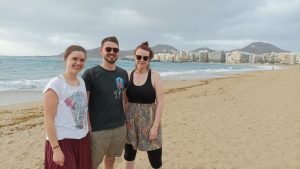
(AC)³ Group picture at the beach of Las Palmas |
The conference started with a nice icebreaker at the conference venue located directly at the beach, which turned out to be perfect for a short swim during the lunch breaks. The science inside was packed with more ocean, but a much colder one, even if the start was located within the Atlantic Ocean. From there, we moved further towards the north, to the Atlantic inflow regions and the Arctic Ocean itself. For us (AC)³ attendees (Zerlina, Finn, Torsten, Wiebke), this meant giving our presentations directly on day one. We all got interesting questions afterwards, and since the conference was relatively small, there were also many good opportunities to talk and discuss our science and projects. The following two days were likewise packed with scientific talks about different aspects of the Arctic Ocean. Additionally, posters were available to have even more possibilities for getting in contact with other researchers. The conference ended with a more touristic excursion around the northern part of Gran Canaria, which again allowed networking and discussing in a really relaxed atmosphere.
After three days full of science and some beach moments, we returned to Bremen with new ideas and inspirations for our future work. Also, the possibility of joining an in-person conference (for Zerlina, even the first one) and thus easily connecting with people was a highlight for us.
A list of all funded travel grants can be found on the IRTG page here.
Published: 2023-05-10
By: Christa Genz
IRTG Travel Grants Programm – Report ASOF Conference Las Palmas (Wiebke Körtke)
IRTG Travel Grants Programme
PhD researchers Wiebke Körtke, Zerlina Hofmann and Finn Heukamp presented their research at the Arctic-Subarctic Ocean Fluxes (ASOF) conference in Las Palmas
What at first glance looked like sea ice on the ocean (out of the plane) fast turned out to be the whitecaps of waves. Which is, of course, much likelier at the location we headed to – Las Palmas de Gran Canaria. However, the sea ice would have fitted better to the conference topic: Arctic-Subarctic Ocean Fluxes (ASOF).
|
Zerlina giving her talk on a submesoscale front in Fram Strait |
Sunset at the beach of Las Palmas |
(AC)³ Group picture at the beach of Las Palmas |
The conference started with a nice icebreaker at the conference venue located directly at the beach, which turned out to be perfect for a short swim during the lunch breaks. The science inside was packed with more ocean, but a much colder one, even if the start was located within the Atlantic Ocean. From there, we moved further towards the north, to the Atlantic inflow regions and the Arctic Ocean itself. For us (AC)³ attendees (Zerlina, Finn, Torsten, Wiebke), this meant giving our presentations directly on day one. We all got interesting questions afterwards, and since the conference was relatively small, there were also many good opportunities to talk and discuss our science and projects. The following two days were likewise packed with scientific talks about different aspects of the Arctic Ocean. Additionally, posters were available to have even more possibilities for getting in contact with other researchers. The conference ended with a more touristic excursion around the northern part of Gran Canaria, which again allowed networking and discussing in a really relaxed atmosphere.
After three days full of science and some beach moments, we returned to Bremen with new ideas and inspirations for our future work. Also, the possibility of joining an in-person conference (for Zerlina, even the first one) and thus easily connecting with people was a highlight for us.
A list of all funded travel grants can be found on the IRTG page here.
Published: 2023-05-10
By: Christa Genz
IRTG Travel Grants Programm – Report ASOF Conference Las Palmas (Zerlina Heukamp)
IRTG Travel Grants Programme
PhD researchers Wiebke Körtke, Zerlina Hofmann and Finn Heukamp presented their research at the Arctic-Subarctic Ocean Fluxes (ASOF) conference in Las Palmas
What at first glance looked like sea ice on the ocean (out of the plane) fast turned out to be the whitecaps of waves. Which is, of course, much likelier at the location we headed to – Las Palmas de Gran Canaria. However, the sea ice would have fitted better to the conference topic: Arctic-Subarctic Ocean Fluxes (ASOF).
|
Zerlina giving her talk on a submesoscale front in Fram Strait |
Sunset at the beach of Las Palmas |
(AC)³ Group picture at the beach of Las Palmas |
The conference started with a nice icebreaker at the conference venue located directly at the beach, which turned out to be perfect for a short swim during the lunch breaks. The science inside was packed with more ocean, but a much colder one, even if the start was located within the Atlantic Ocean. From there, we moved further towards the north, to the Atlantic inflow regions and the Arctic Ocean itself. For us (AC)³ attendees (Zerlina, Finn, Torsten, Wiebke), this meant giving our presentations directly on day one. We all got interesting questions afterwards, and since the conference was relatively small, there were also many good opportunities to talk and discuss our science and projects. The following two days were likewise packed with scientific talks about different aspects of the Arctic Ocean. Additionally, posters were available to have even more possibilities for getting in contact with other researchers. The conference ended with a more touristic excursion around the northern part of Gran Canaria, which again allowed networking and discussing in a really relaxed atmosphere.
After three days full of science and some beach moments, we returned to Bremen with new ideas and inspirations for our future work. Also, the possibility of joining an in-person conference (for Zerlina, even the first one) and thus easily connecting with people was a highlight for us.
A list of all funded travel grants can be found on the IRTG page here.
Published: 2023-05-10
By: Christa Genz
IRTG Travel Grants Programm – Report AWI Potsdam 2023 (Alexander Mchedlishvili)
IRTG Travel Grants Programme
PhD researcher Alexander Mchedlishvili joined AWI Potsdam for a research stay
During my brief stay at AWI Potsdam I worked closely with Wolfgang Dorn on the integration of sea ice atmosphere ridge form drag into the coupled sea ice-atmosphere-ocean model HIRHAM-NAOSIM. There I had meetings with Wolfgang and Annette Rinke on what equations and methods to use to for the implementation. Thanks to this research stay, I am now able to run the model myself thanks to Wolfgang’s instructions and the parameterisation implementation is underway. I thoroughly enjoyed the closer cooperation and supervision of both Wolfgang and Annette and think this has definitely helped further my project.
A list of all funded travel grants can be found on the IRTG page here.
Published: 2023-04-24
By: Christa Genz
IRTG Travel Grants Programm – Report EGU 2023 (Nils Slättberg)
IRTG Travel Grants Programme
PhD researcher Nils Slättberg joined the EGU General Assembly 2023 in Vienna
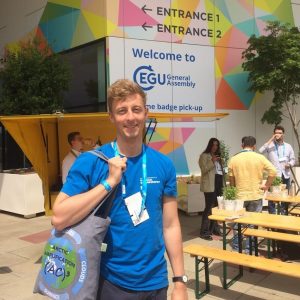
With help from the (AC)³ IRTG Travel Grant, I went to the EGU General Assembly 2023 and presented some of my work there. The annual EGU meetings in Vienna are Europe’s largest geosciences events, featuring contributions from a wide range of disciplines and topics. Bringing together knowledge from different areas is close to my heart – and also to my PhD project, in which I investigate the atmospheric column in the North Atlantic Arctic in conjunction with oceanic, atmospheric and cryospheric variability.
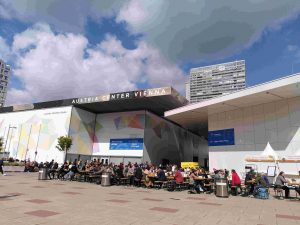
Photo: Nils Slättberg
Never having presented at a large conference before, I wanted to gain practice and confidence in briefly explaining my science to a larger audience. I also wanted to connect with other scientists and learn new things from discussing with them and hearing about their work. In doing so, I got new inspiration and ideas for my project and felt that I could put my topic into a wider perspective. In addition, I learned much during non-disciplinary sessions, discussing things like (the lack of) inclusion and diversity in science. Now that I’m back in the office, I can’t wait to go through my notes from the conference and try out some of the new ideas.
A list of all funded travel grants can be found on the IRTG page here.
Published: 2023-04-23
By: Christa Genz
IRTG Travel Grants Programm – Report University Helsinki 2023 (Giovanni Chellini)
IRTG Travel Grants Programme
PhD researcher Giovanni Chellini visited the research group of Dmitri Moisseev at the University of Helsinki for a research stay
I spent the week 20-24 March 2023 at the University of Helsinki visiting Prof. Dmitri Moisseev’s group. I had the opportunity to present and discuss my work with Prof. Moisseev, scientists in his group, as well as scientists from the Finnish Meteorological Institute (FMI). The extensive and constructive discussions allowed me to expand and improve my current work on the impact of turbulence on the growth of ice particles in Arctic low-level mixed-phase clouds. This work is currently being prepared for publication, and the discussions in Helsinki helped significantly improve the quality of the manuscript. Additionally, I worked on a side project, together with Prof. Moisseev, on the topic of quantifying linear depolarization signatures of needle and needle aggregate precipitation particles.
A list of all funded travel grants can be found on the IRTG page here.
Published: 2023-03-20
By: Christa Genz
IRTG Travel Grants Programm – Report EGU Snow Winter School Davos (Janna Rückert)
IRTG Travel Grants Programme
PhD researcher Janna Rückert joined the EGU Snow Science Winter School in Davos
I had the wonderful chance to take part in the 7th EGU Snow Science Winter School in Davos, Switzerland, from January 29th to February 4th, 2023. Motivated lecturers from different institutes from Switzerland, Finland, France and the UK gave insights into a variety of snow-related topics. Their talks gave a great overview, covering, e.g., snow measurements as well as modelling and remote sensing, snow climate feedbacks and snow hydrology.
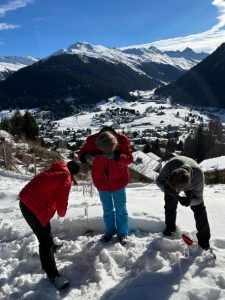
A big part of the school was dedicated to field work and we learned different measurement techniques ranging from traditional snow pits to state-of-the-art microcomputed tomography. Luckily, we had snow and great weather conditions in Davos: perfect for being outside in the snow all day to do measurements. Thereby I gained a different perspective on data that I had been working with before. I now have not only a much better idea about the way such data is obtained but also about its uncertainties and limitations. One example are snow parameters derived from measurements with the SnowMicroPen instrument. I am now able to interpret existing data from the MOSAiC campaign and use that in a current study. Also, with the insights gained, both from the program and the many informal discussions with others during mealtimes, I already revised some of the parameters in my current model setup for the simulation of microwave emissions of snow on Arctic sea ice. During the winter school, we came up with our own little research question in small teams and carried out the measurements that we planned ourselves, always with support from the lecturers. Organizing our own field work and the quick data analysis thereafter was very instructive. The winter school was a great chance to meet other students, which I was really enjoying after a PhD time dominated by Covid restrictions and virtual meetings. I can conclude that snow is beautiful and that I am grateful to the organizers of the winter school and the IRTG that enabled my participation!
A list of all funded travel grants can be found on the IRTG page here.
Published: 2023-01-29
By: Christa Genz
IRTG Travel Grants Programm – Report AWI Potsdam 2022 (Benjamin Kirbus)
IRTG Travel Grants Programme
PhD candidate Benjamin Kirbus went for a scientific exchange meeting to the AWI Potsdam colleagues
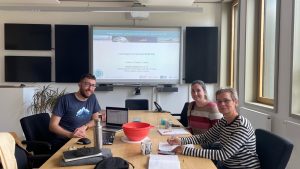
On 15th September 2022, I was able to embark on very constructive one-day journey to visit Dr. Annette Rinke and PhD candidate Sofie Tiedeck at AWI Potsdam. The institute is beautifully located on a historical campus, within a green forest patch not too far from Potsdam main station. The general topics of our meeting were opportunities and challenges of Lagrangian air mass tracking. First, we had some very fruitful technical discussions on using the LAGRangian ANalysis TOol LAGRANTO (https://doi.org/10.5194/gmd-8-2569-2015). LAGRANTO can be driven by very diverse input data, such as reanalysis (ERA5) or model data (ICON). Selecting the appropriate starting points for trajectory calculations is far from trivial, especially for analyzing synoptic-scale features such as Arctic Warm Air Intrusions (WAI). The spatiotemporal variability of such WAI combined with possible strong vertical wind shear can cause a large spread in computed trajectories. We agreed on the importance of comparing different starting points as well as ideally forward vs. backward calculations. Tracing meteorological variables as well as analyzing height-resolved curtain views of along-trajectory air mass evolution (“pseudo-lidar”) can then deliver many novel insights. Our second focus was the discussion of the article we are cooperating on in the frameworks of Cross-Cutting Activity CCA4: Air mass transport and transformation. We hope to contribute to the research field by providing some novel insights into Arctic WAI. This work is based on a case recorded during the MOSAiC expedition in April 2020 at RV Polarstern. We agreed on combining classic Eulerian with novel Lagrangian viewpoints, on spatial scales from the synoptic level down to process level. We discussed how sensitivity studies can help us better understand the impact e.g. of CCN concentration or initial moisture inflow on cloud evolution. All in all, I thoroughly enjoyed my stay at AWI Potsdam. Besides the great hospitality of Annette, Sofie and other AWI colleagues, I gained more insights into applying LAGRANTO also for other datasets than just reanalysis. Especially the potential of comparing trajectories between modelled control and experimental runs became very apparent. Furthermore, we were able to further “narrow down” the storyline of our common CCA4 paper, which now will have a clearer scope and objectives. Finally, I want to cordially thank both Annette and Sofie for their time and the IRTG for funding this very productive short-term stay. Cheers, Benjamin
A list of all funded travel grants can be found on the IRTG page here.
Published: 2022-09-15
By: Christa Genz
IRTG Travel Grants Programm – Report UC Boulder 2022 (Theresa Kiszler)
IRTG Travel Grants Programme
PhD candidate Theresa Kiszler went for a Research Stay to the University of Colorado in Boulder
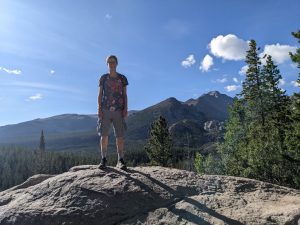
I visited the Institute of Atmospheric and Oceanic Sciences at University of Colorado Boulder in August 2022 for two weeks. I decided to go there because I wanted to visit Jennifer Kay’s working group and because Boulder is an atmospheric science hub. During my stay I got to know several PhD students as well as senior scientists throughout the institute. I was able to present my work in the group meeting and engage in discussions relating to my PhD thesis objectives and how they possibly fit into the larger context of Arctic amplification. In my PhD I am working on simulations around Ny-Alesund (Svalbard) and using observations from there to study the representation of the clouds in the model. Especially the mixed-phase clouds are interesting as they have a high complexity and as we found the model we use (ICON-LEM) overestimates the ice occurrence in clouds. For the upcoming steps I had discussions with Jennifer as well as Matthew Schupe who also works in Boulder and is a Mercator Fellow in (AC)³. Both work on topics related to Arctic clouds. It was helpful to have these conversations and I felt more inspired afterwards. Besides the scientific input I also enjoyed the experience of being at an institute in a different country. I believe this broadened my perspective significantly and challenged me to think about different approaches to science and academia in general. Sadly, many of the institutes such as NCAR (National Center for Atmospheric Research) were closed to guest due to the continuing Covid restrictions. Nevertheless, I took the time to drive past these locations to do some science tourism which was fun. I also visited a forest which was regrowing after recent wildfires and went on a weekend trip through the Rocky Mountains National Park with a friend. It was generally quite hot during my stay (> 30°C every day) but that made it easier to focus on my work in front of the computer during the hot hours and enjoy the fantastic nature during the cooler hours of the day.
A list of all funded travel grants can be found on the IRTG page here.
Published: 2022-08-01
By: Christa Genz
IRTG Travel Grants Programm – Report UCSC 2022 (Olivia Linke)
IRTG Travel Grants Programme
PhD candidate Olivia Linke spent two months at the University of California in Santa Cruz (UCSC)
Throughout July and August 2022 I visited the University of California at Santa Cruz (UCSC), California to exchange research ideas with the group of Prof. Nicole Feldl. Nicole took part in an advanced training module of the LGS-CAR in 2021 about the Arctic lapse-rate feedback, which is how I got to know her and her research.
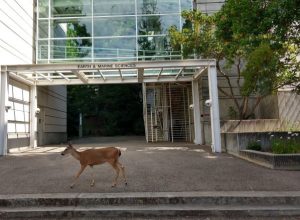
Photo: Olivia Linke
As guest researcher at UCSC, I gained a new perspective on my PhD work which mostly applies data from several climate models for better understanding the lapse-rate feedback in the Arctic. So far, I have mostly worked with climate model data to understand this particular process, and its contribution to Arctic amplification in the past. My work at UCSC mostly focused on a better prediction of this feedback process in the future, by using an emergent constraint approach. The main idea of this approach is to identify physically plausible relationships between future climate predictions, and aspects of the current climate state across models. By including observations, this can allow us to narrow down the simulated range of model simulations, and ultimately improve our prediction of Arctic amplification in the future. The collaboration was very valuable in terms of gaining new ideas and insights in this specific approach, and networking with other researchers with a similar focus. The research stay has helped me to define a new subtopic within my research plan, and to write a paper which we plan to submit by the end of March this year. Finally, it was a wonderful opportunity to get to know Nicole and her group at UCSC, and to discuss our research together. Santa Cruz is a beautiful city, not only due to the Pacific ocean being close by, but also due to its wildlife, which even infiltrates the UCSC campus: see picture 😉
A list of all funded travel grants can be found on the IRTG page here.
Published: 2022-07-06
By: Christa Genz
IRTG Travel Grants Programm – Report Universidade de Aveiro 2022 (Melanie Lauer)
IRTG Travel Grants Programme
PhD candidate Melanie Lauer spent a week at Universidade de Aveiro, Portugal in Irina Gorodetskaya’s group
The IRTG travel grant gave me the opportunity to visit Irina Gorodetskaya, one of my supervisors, at the University of Aveiro in Portugal beginning of July. As part of her Mercator Fellowship within (AC)³, Irina investigates Atmospheric Rivers in the Arctic. Atmospheric Rivers are long and narrow structures that transport anomalous huge amounts of water vapor and heat from the lower latitudes towards the polar regions. Previous studies have shown that they produce significant amounts of rain and snow and impact the surface energy budget. However, their effect on the Arctic climate system is still unclear.
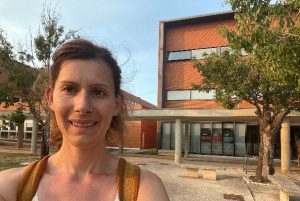
Photo: Melanie Lauer
In order to analyse, in how far ARs affect the Arctic climate system, they must first be detected. Within the project E04, we are using the global detection algorithm by Guan & Waliser. Furthermore, the detection algorithm by Irina Gorodetsakya is planned to use. This algorithm was developed to detect ARs in Antarctica. However, in order to apply her algorithm for the Arctic, some adjustments need to be made. Together with Carolina Viceto, a PhD candidate of Irina, I worked on these adjustments. We have tried several approaches, but none has brought the expected success. However, these approaches can be excluded in the future. Carolina and I also had a personal exchange about our work, which was very productive and helpful for my future work. During my stay, I shared the office with other people from the working group. This allowed me to learn about their work which was mainly related to ARs in Antarctica. Of particular interest was the master thesis of one student who also focuses on fronts which are detected by Michael Sprenger from the ETH Zürich. As I am also interested in cyclones and fronts in addition to ARs, I was in contact with Michael Sprenger after my research stay who kindly provides me with the data. Although we were not able to complete the algorithm during my stay in Aveiro, I was able to gain new insights for my further work through the personal exchanges.
A list of all funded travel grants can be found on the IRTG page here.
Published: 2022-07-04
By: Christa Genz
IRTG Travel Grants Programm – Report EGU 2022 (Moritz Zeising)
IRTG Travel Grants Programme
PhD candidate Moritz Zeising joined the EGU General Assembly 2022
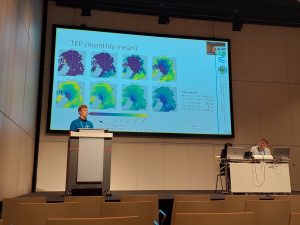
The experience to participate for the first time at an on-site conference was great. The European Geoscience Union General Assembly 2022 in Vienna offered an opportunity to present my research on modelling biogenic aerosol precursors to the broader oceanography (and cryosphere) audience in a session on the Arctic Ocean. Further, the discussion and networking during the conference itself, but also during the evenings at the Cryosphere division networking event or a self-organized oceanography networking was helpful to discuss ongoing research and ideas with others. To present linkages within (AC)³, Anisbel León and me pointed at each other’s projects during our presentations.
|
|
A session of the EGU Equality, Diversity and Inclusion working group and a panel discussion on neo-colonialism in science enriched the conference experience even more. As outreach and to connect with other EGU22 participants, I posted interesting topics, quotes, articles and links on Twitter and partly also on Instagram.
A list of all funded travel grants can be found on the IRTG page here.
Published: 2022-05-23
By: Christa Genz
IRTG Travel Grants Programm – Report CHESS winter school 2022 (Finn Heukamp)
IRTG Travel Grants Programme
PhD candidate Finn Heukamp joint the winter school on “Atmosphere-Ocean-Sea Ice Interaction Processes” in Svalbard
The winter school on Svalbard in May 2022 was designed to give a broad overview on various topics regarding the interactions of the Arctic Ocean, atmosphere and especially the sea ice. As the winter school took place on Svalbard, it was also a great opportunity for me as a modeller to perceive the Arctic environment and get to know the region I am working on in reality. In addition to 6-8 lectures each day we did an evening boat tour on the Fjord to the edge of the sea ice and a nearby glacier and a guided walking tour through Longyearbyen one afternoon. At the day of arrival, we had some drinks outside but could not withstand the icy wind for long. As every Ph.D. student brought a poster on their recent work we had some nice and interesting poster sessions.
Processes covered by the lectures were ranging from Arctic-wide, large-scale ocean and atmosphere circulation changes to millimetre-scale processes in the formation of sea ice. The lectures covered different aspects of my work, especially the larger-scale processes as the interaction of the Atlantic Water flow through the Arctic and its impact on local sea ice formation, which was very interesting to hear as I am working on exactly that interface. As I have a strong university background in tropical oceanography, this winter school provided a great overview on specific Arctic Ocean processes that I had a lack of knowledge before. Further, perceiving the Arctic environment, all the ice and the polar day was very fascinating and was a nice distraction from my daily model work on these regions.
In general, the winter school was a big success in all of its facets. We had a highly motivated team of lectures giving interesting presentations on their specific working fields. Moreover, the group of roughly 30 Ph.D. students was really nice and we had a good time learning, networking and being in the Arctic.
A list of all funded travel grants can be found on the IRTG page here.
Published: 2022-05-01
By: Christa Genz
IRTG Travel Grants Programm – Report CHESS winter school 2022 (Hannah Niehaus)
IRTG Travel Grants Programme
PhD candidate Hannah Niehaus joint the CHESS winter school on Ocean, Sea Ice, and Atmosphere Interactions in Longyearbyen, Svalbard
Already the flight to Svalbard was a highlight seeing sea ice for the first time. The school itself started on Sunday afternoon with an icebreaker event where we met all participants and lecturers at a bonfire in a relaxed and open atmosphere. From Monday to Friday we had plenty of lectures on different compartments and approaches of Arctic research. On Monday there was also the first poster session where I was able to present and discuss my work with the other participants and with the lecturers. The posters were kept for the following two days to enable the continuation of discussions in the coffee and lunch breaks that were spent together in the same area where the poster session took place. Another highlight of the course was a boat trip on Tuesday evening where we could actually see sea ice from close distance, especially young pancake ice whose formation we had just discussed the same day in a lecture. In general the participation in this school was great to gain a broader overview of the important compartments and their interplay in the Arctic as well as a feeling for the importance and integration of my small subproject. Discussing and sharing experiences with other students was also very motivating and after a slow start in my PhD during covid I feel now a little bit more connected to other researchers and institutions in my field.
|
|
A list of all funded travel grants can be found on the IRTG page here.
Published: 2022-05-01
By: Christa Genz
IRTG Travel Grants Programm – Report CHESS winter school 2022 (Iris Papakonstantinou-Presvelou)
IRTG Travel Grants Programme
PhD candidate Iris Papakonstantinou-Presvelou joint the winterschool on “Atmosphere-Ocean-Sea Ice Interaction Processes” in Svalbard
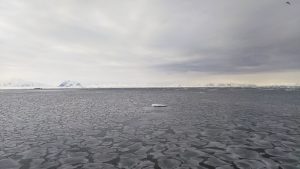
In spring 2022, I attended the winter school on “Atmosphere-Ocean-Sea Ice Interaction Processes” in Longyearbyen, Svalbard. I never could have imagined, when I was first applying for this PhD position, that I would actually be able to see the Arctic region with my own eyes! Especially from the perspective of a modeller, there are very few opportunities to participate in the action field. This trip gave me so many fascinating pictures and memories that will remain in my mind forever. The chunks of sea ice floating on the sea surface and the shrinking glaciers in such short distance that we witnessed during our cruise in the Fjord were just some of them! The school was taking place in an exciting environment, under the constant presence of daylight, where everything around was cold and frozen except indoors! During our time there, there were many opportunities for scientific interaction, during the poster and lecture sessions, but also the coffee/lunch breaks, which created a relaxed environment for productive discussions and exchange. I would heartily encourage anyone who is investigating the Arctic climate to visit the Arctic at least once in her/his life!
A list of all funded travel grants can be found on the IRTG page here.
Published: 2022-05-01
By: Christa Genz
IRTG Travel Grants Programm – Report London 2022 (Alexander Mchedlishvili)
IRTG Travel Grants Programme
PhD candidate Alexander Mchedlishvili went for a research stay to the University College London
Throughout June and the first part of July of 2022 I went to the University College London Earth Sciences department to work with Dr. Michel Tsamados, my host-supervisor there and Dr. Alek Petty, associate Research Scientist at NASA’s Goddard Space Flight Center (GSFC) who visited UCL in the later part of my stay. Working on my next paper about atmospheric drag coefficients derived from NASA’s ICESat-2 altimeter satellite, the input from Michel and Alek was invaluable for my work. With said input, I am now on track to submit this publication in the next months as we covered the basis of the scientific discussion we aim to present in the manuscript.
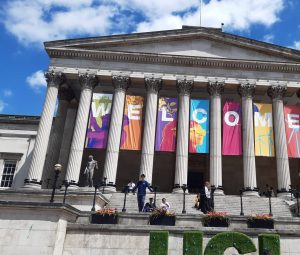
For the time I was in London I was a guest researcher in the group: The Centre for Polar Observation and Modelling (CPOM). This experience was very valuable in terms of the new insights I have received by presenting my work to a new group that also specializes in sea ice. There I met other PhD students who also specialize in what my project is about and with them discussed the potential of future collaborations. Specially, I have found students that are also working with sea ice roughness – a topic that only I specialize in in my group at the Institute of Environmental Physics in Bremen. Thus it was very useful to discuss the specifics of my work with experts that have been working with the exact same topic for the past few years. Lastly, I believe the networking I have done throughout this experience will become valuable in the future and am very grateful to have made so many valuable contacts. Meeting Michel and Alek in person, considering they are co-authors in my next manuscript, definitely helped put everyone on the same page and boost the exchange in communications that is essential for the processing of the manuscript prior to submission.
A list of all funded travel grants can be found on the IRTG page here.
Published: 2022-03-13
By: Christa Genz
IRTG Travel Grants Programm – Report FMI 2021 (Lars Aue)
IRTG Travel Grants Programme
PhD candidate Lars Aue was supported for his research stay in Helsinki at the FMI
As part of my PhD project within (AC)³, I am cooperating with two scientists from Finland, who are working at the Finnish Meteorological Institute (FMI) and the University of Helsinki. However, due to the large distance between Germany and Finland and the corona related cancellation of most of the scientific meetings in the last two years, we only met in zoom meetings to discuss our joined research for a long time. With the help of the IRTG travel grant, I was eventually able to visit our cooperation partners last winter in Helsinki.
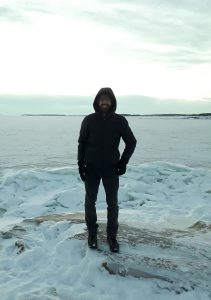
I spend four weeks in Helsinki and had a work place at the FMI during that time. That way I could do my regular work and at the same time meet our cooperation partners and colleagues from their working groups. Having started my PhD during corona lockdown and spending a lot of time in home office, that was a great opportunity for me to exchange with scientists from outside my own working group and to build up some new contacts.
The possibility to discuss my scientific results intensively with our cooperation partners – without always having to schedule a zoom meeting first – was very beneficial for my PhD project. I was able to make a lot of progress during my research stay and also started to work on a first draft for a joined publication, which is submitted by now. I also made use of the research stay to promote my work within (AC)³ to the scientists working at my host institutes, for example during a seminar talk.
Apart from all of that, it was very nice to explore Helsinki and its environment, watch the aurora during a trip to Lapland and also see some real life sea ice, which is the main subject of my PhD thesis and which I have so far only studied on the computer monitor.
A joined paper with scientists from the Finnish Meteorological Institute and the University of Helsinki came out of the research stay, which can be found here.
A list of all funded travel grants can be found on the IRTG page here.
Published: 2021-11-15
By: Christa Genz
Contact the IRTG coordinator:
phone:++49 (0) 221 470 4127
e-mail: [email protected]
[email protected]


 .
.