
Project Leaders: Roel Neggers, Johannes Quaas



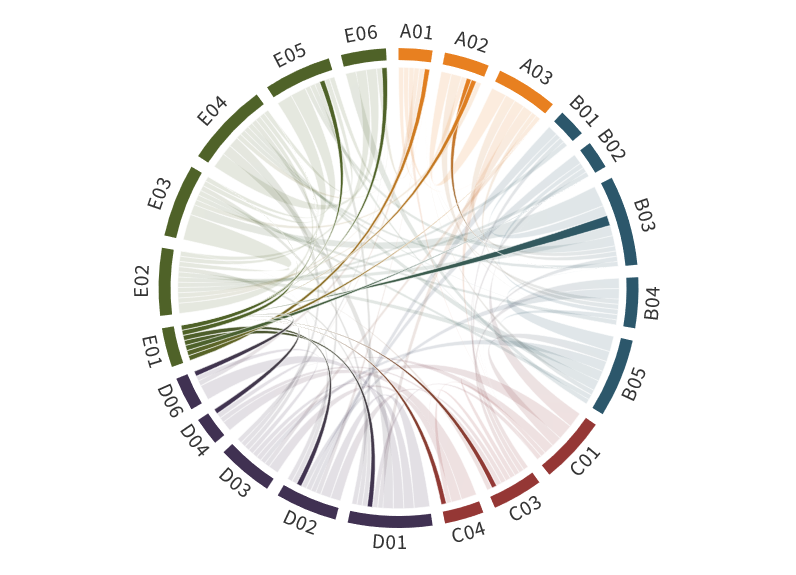
Project E01 aims to quantify and understand Arctic climate feedbacks using a modeling perspective. This started in phase I with a quantification of feedbacks from climate models and a process-oriented focus on the cloud feedback. On the basis of the results, we selected the Arctic lapse-rate feedback (LRF) as the one that stands out, besides the surface albedo feedback, as cause for Arctic amplification, for particular scrutiny in phase II. A key result of phase II was that the Arctic energy budget within the atmosphere, that used to be dominated by a radiative-advective equilibrium, at least occasionally, but increasingly, is moving towards the radiative-convective equilibrium that determines Tropical lapserates. More precisely, the radiative cooling of the atmosphere is increasingly balanced by the surface sensible and latent heat fluxes (the latter measurable as precipitation), driven by shallow as well as deeper convection. This leads to the scientific focus of E01 in phase III on convection. Essential climate feedbacks are related to atmospheric convection, including most notably the water vapor and LRF, but also cloud feedback mechanisms.
This topic will be addressed by synergistic exploitation of models: high-resolution convection-resolving simulations for representative cases; assessment of changing convection mechanisms in available climate simulations, reanalysis and satellite retrievals; joint improvement of kilometer-scale ICON using novel convective parameterizations; and investigation of implications for feedbacks and future Arctic climate change.
Hypothesis:
In a warming Arctic, atmospheric convection will increasingly upset the prevailing radiative-advective equilibrium, with consequences for Arctic amplification.
Specifically, E01 will answer the questions:
- What determines the changing role of convection in the Arctic?
- What are consequences for the water vapor, lapse rate, and cloud feedbacks?
- Is there a demonstrable improvement in the ICOsahedral Non-hydrostatic (ICON) atmosphere model from a new scale-aware convection parameterization?
E01 mostly links to SQ1, by assessing the role changing convection for Arctic climate feedbacks. It also constrains models and thus links to SQ2.
Achievements phase I
E01 has shown, that the total feedback in the Arctic in many global circulation models leads to a local runaway climate, due to the surface albedo and lapse rate feedback mechanisms (Block et al., 2020). The lapse rate feedback is strongest in boreal winter over sea ice and land, and is related to the temperature inversion strength (Lauer et al., 2019). Furthermore, the ICON modelling system has been thoroughly tested against observations in the Arctic (Neggers et al., 2019), and is ready for use in studies of feedback mechanisms in Arctic climate during phase II.
Role within (AC)³
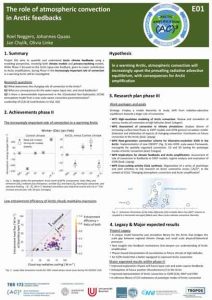
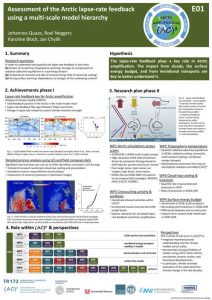
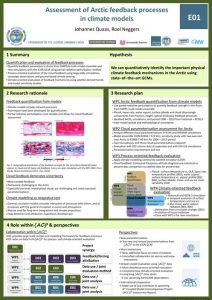
Project Posters
| Phase III Evaluation poster 2023 | Phase II Evaluation poster 2019 | Phase I Evaluation poster 2015 |
 |
 |
 |
Project Members
Project Leader in A01 , E01
Institute for Geophysics and Meteorology (IGM)
University of Cologne
Pohligstr. 3
50969 Cologne
mail:
[email protected]

Project Leader in D01 , E01 , E06 , Z04
Leipzig Institute for Meteorology (LIM)
University of Leipzig
Stephanstr. 3
04103 Leipzig
++49 (0) 341 97 32852
mail:
[email protected]
PhD in E01
Leipzig Institute for Meteorology (LIM)
University of Leipzig
Stephanstr. 3
04103 Leipzig
++49 (0) 341 97 32938
mail:
[email protected]

PhD in E01
Institute for Geophysics and Meteorology (IGM)
University of Cologne
Pohligstr. 3
50969 Cologne
mail:
[email protected]
Publications
2026
2025
Neggers, R. A. J., Chylik, J., and Schnierstein, N. , June 2025: The entrainment efficiency of persistent arctic mixed-phase clouds as inferred from daily large-eddy simulations during the MOSAiC drift. J. Atmospheric Sci., 82(6):1195–1213, doi:10.1175/JAS-D-24-0188.1
2024
Wendisch, M., Crewell, S., Ehrlich, A., Herber, A., Kirbus, B., Lüpkes, C., Mech, M., Abel, S. J., Akansu, E. F., Ament, F., Aubry, C., Becker, S., Borrmann, S., Bozem, H., Brückner, M., Clemen, H., Dahlke, S., Dekoutsidis, G., Delanoë, J., De La Torre Castro, E., Dorff, H., Dupuy, R., Eppers, O., Ewald, F., George, G., Gorodetskaya, I. V., Grawe, S., Groß, S., Hartmann, J., Henning, S., Hirsch, L., Jäkel, E., Joppe, P., Jourdan, O., Jurányi, Z., Karalis, M., Kellermann, M., Klingebiel, M., Lonardi, M., Lucke, J., Luebke, A. E., Maahn, M., Maherndl, N., Maturilli, M., Mayer, B., Mayer, J., Mertes, S., Michaelis, J., Michalkov, M., Mioche, G., Moser, M., Müller, H., Neggers, R., Ori, D., Paul, D., Paulus, F. M., Pilz, C., Pithan, F., Pöhlker, M., Pörtge, V., Ringel, M., Risse, N., Roberts, G. C., Rosenburg, S., Röttenbacher, J., Rückert, J., Schäfer, M., Schaefer, J., Schemann, V., Schirmacher, I., Schmidt, J., Schmidt, S., Schneider, J., Schnitt, S., Schwarz, A., Siebert, H., Sodemann, H., Sperzel, T., Spreen, G., Stevens, B., Stratmann, F., Svensson, G., Tatzelt, C., Tuch, T., Vihma, T., Voigt, C., Volkmer, L., Walbröl, A., Weber, A., Wehner, B., Wetzel, B., Wirth, M., and Zinner, T. , August 2024: Overview: Quasi-Lagrangian Observations of Arctic Air Mass Transformations – Introduction and Initial Results of the HALO–(A C)\textsuperscript3 Aircraft Campaign. Atmos. Chem Phys, 24(15):8865–8892, doi:10.5194/acp-24-8865-2024
Schnierstein, N., Chylik, J., Shupe, M. D., and Neggers, R. A. J. , 2024: Standardized daily high-resolution large-eddy simulations of the arctic boundary layer and clouds during the complete MOSAiC drift. J. Adv. Model. Earth Syst., 16(11):e2024MS004296, doi:10.1029/2024MS004296
2023
Linke, O., Feldl, N., and Quaas, J. , December 2023: Current-Climate Sea Ice Amount and Seasonality as Constraints for Future Arctic Amplification. Environ. Res. Clim., 2(4):045003, doi:10.1088/2752-5295/acf4b7
Linke, O., Quaas, J., Baumer, F., Becker, S., Chylik, J., Dahlke, S., Ehrlich, A., Handorf, D., Jacobi, C., Kalesse-Los, H., Lelli, L., Mehrdad, S., Neggers, R. A. J., Riebold, J., Saavedra Garfias, P., Schnierstein, N., Shupe, M. D., Smith, C., Spreen, G., Verneuil, B., Vinjamuri, K. S., Vountas, M., and Wendisch, M. , September 2023: Constraints on Simulated Past Arctic Amplification and Lapse Rate Feedback from Observations. Atmos. Chem Phys, 23(17):9963–9992, doi:10.5194/acp-23-9963-2023
Chylik, J., Chechin, D., Dupuy, R., Kulla, B. S., Lüpkes, C., Mertes, S., Mech, M., and Neggers, R. A. J. , April 2023: Aerosol Impacts on the Entrainment Efficiency of Arctic Mixed-Phase Convection in a Simulated Air Mass over Open Water. Atmos. Chem Phys, 23(8):4903–4929, doi:10.5194/acp-23-4903-2023
2022
Geerts, B., Giangrande, S. E., McFarquhar, G. M., Xue, L., Abel, S. J., Comstock, J. M., Crewell, S., DeMott, P. J., Ebell, K., Field, P., Hill, T. C. J., Hunzinger, A., Jensen, M. P., Johnson, K. L., Juliano, T. W., Kollias, P., Kosovic, B., Lackner, C., Luke, E., Lüpkes, C., Matthews, A. A., Neggers, R., Ovchinnikov, M., Powers, H., Shupe, M. D., Spengler, T., Swanson, B. E., Tjernström, M., Theisen, A. K., Wales, N. A., Wang, Y., Wendisch, M., and Wu, P. , May 2022: The COMBLE Campaign: A Study of Marine Boundary Layer Clouds in Arctic Cold-Air Outbreaks. Bull. Am. Meteorol. Soc., 103(5):E1371–E1389, doi:10.1175/BAMS-D-21-0044.1
Linke, O. and Quaas, J. , March 2022: The Impact of CO2-Driven Climate Change on the Arctic Atmospheric Energy Budget in CMIP6 Climate Model Simulations. Tellus Dyn Meteorol Ocean., 74(2022):106–118, doi:10.16993/tellusa.29
2021
2020
Lauer, M., Block, K., Salzmann, M., and Quaas, J. , April 2020: CO2-forced Changes of Arctic Temperature Lapse Rates in CMIP5 Models. Meteorol. Z., 29(1):79–93, doi:10.1127/metz/2020/0975
Block, K., Schneider, F. A., Mülmenstädt, J., Salzmann, M., and Quaas, J. , January 2020: Climate Models Disagree on the Sign of Total Radiative Feedback in the Arctic. Tellus Dyn Meteorol Ocean., 72(1):1696139, doi:10.1080/16000870.2019.1696139
2019
Goren, T., Kazil, J., Hoffmann, F., Yamaguchi, T., and Feingold, G. , December 2019: Anthropogenic Air Pollution Delays Marine Stratocumulus Breakup to Open Cells. Geophys. Res. Lett., 46(23):14135–14144, doi:10.1029/2019GL085412
Wendisch, M., Macke, A., Ehrlich, A., Lüpkes, C., Mech, M., Chechin, D., Dethloff, K., Velasco, C. B., Bozem, H., Brückner, M., Clemen, H., Crewell, S., Donth, T., Dupuy, R., Ebell, K., Egerer, U., Engelmann, R., Engler, C., Eppers, O., Gehrmann, M., Gong, X., Gottschalk, M., Gourbeyre, C., Griesche, H., Hartmann, J., Hartmann, M., Heinold, B., Herber, A., Herrmann, H., Heygster, G., Hoor, P., Jafariserajehlou, S., Jäkel, E., Järvinen, E., Jourdan, O., Kästner, U., Kecorius, S., Knudsen, E. M., Köllner, F., Kretzschmar, J., Lelli, L., Leroy, D., Maturilli, M., Mei, L., Mertes, S., Mioche, G., Neuber, R., Nicolaus, M., Nomokonova, T., Notholt, J., Palm, M., Van Pinxteren, M., Quaas, J., Richter, P., Ruiz-Donoso, E., Schäfer, M., Schmieder, K., Schnaiter, M., Schneider, J., Schwarzenböck, A., Seifert, P., Shupe, M. D., Siebert, H., Spreen, G., Stapf, J., Stratmann, F., Vogl, T., Welti, A., Wex, H., Wiedensohler, A., Zanatta, M., and Zeppenfeld, S. , May 2019: The Arctic Cloud Puzzle: Using ACLOUD/PASCAL Multiplatform Observations to Unravel the Role of Clouds and Aerosol Particles in Arctic Amplification. Bull. Am. Meteorol. Soc., 100(5):841–871, doi:10.1175/BAMS-D-18-0072.1
De Roode, S. R., Frederikse, T., Siebesma, A. P., Ackerman, A. S., Chylik, J., Field, P. R., Fricke, J., Gryschka, M., Hill, A., Honnert, R., Krueger, S. K., Lac, C., Lesage, A. T., and Tomassini, L. , March 2019: Turbulent Transport in the Gray Zone: A Large Eddy Model Intercomparison Study of the CONSTRAIN Cold Air Outbreak Case. J. Adv. Model. Earth Syst., 11(3):597–623, doi:10.1029/2018MS001443
2018
Pithan, F., Svensson, G., Caballero, R., Chechin, D., Cronin, T. W., Ekman, A. M. L., Neggers, R., Shupe, M. D., Solomon, A., Tjernström, M., and Wendisch, M. , November 2018: Role of Air-Mass Transformations in Exchange between the Arctic and Mid-Latitudes. Nat. Geosci., 11(11):805–812, doi:10.1038/s41561-018-0234-1
2017
Salzmann, M. , May 2017: The Polar Amplification Asymmetry: Role of Antarctic Surface Height. Earth Syst. Dyn., 8(2):323–336, doi:10.5194/esd-8-323-2017


 .
.