
Project Leaders: Susanne Crewell, Gunnar Spreen, Manfred Wendisch (former PL: Justus Notholt)
Purpose of the IRTG
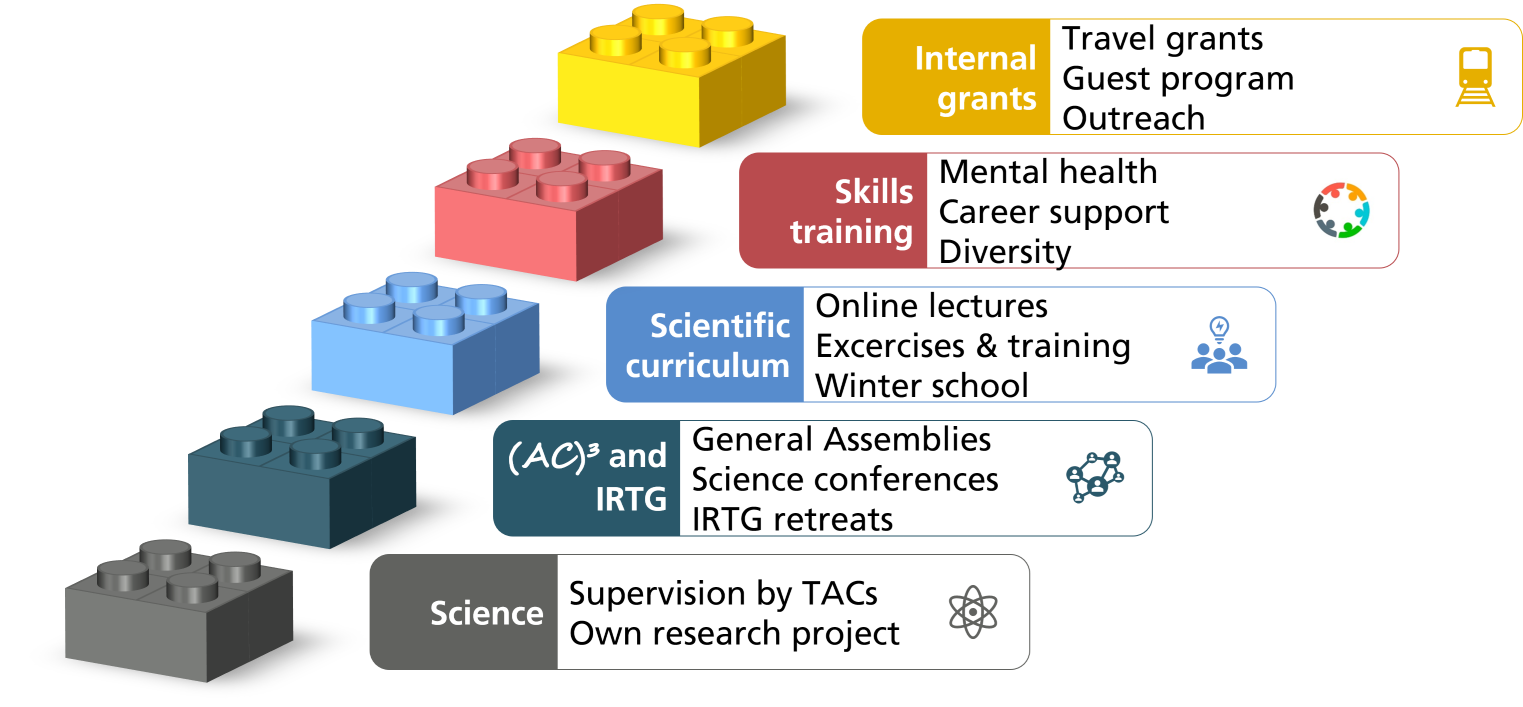
The Integrated Research Training Group (IRTG) supports (AC)³ doctoral researchers during their dissertation work to enable them to become independent researchers in academia, or leading collaborators beyond. (AC)³ provides structured guidance for common standards of supervision for doctoral researchers through the IRTG, which should enable the members to complete their dissertation within a reasonable time. Each doctoral researcher is supervised by a doctoral committee – the Thesis Advisory Committee (TAC) – consisting of the academic and scientific supervisor, the scientific advisor and the (optional) mentor as a third member. A supervision agreement is concluded between each doctoral researcher and the respective TAC members, which defines the responsibilities and duties of the doctoral researcher, the supervisor, and the other TAC members. Furthermore, the IRTG offers a scientific training program, skills training, and an internal grants program to support networking of Early Career Researchers (ECRs), including doctoral researchers and developing (early) postdoctoral researchers (postdocs). These activities will be continued and further developed in phase III of (AC)³. In close cooperation with the local graduate schools of the (AC)³ partners, the IRTG complements the existing PhD programs through a project-specific qualification schedule including funding opportunities, and guarantees fair conditions via a harmonized supervision agreement. |
The IRTG also serves as a central contact point for doctoral researchers in case of problems in strict confidentiality. Moreover, the IRTG supports the development of an independent scientific profile through specific activities like mentoring, public outreach, opportunities for responsibility, and establishing an alumni network. To provide this supportive environment for doctoral researchers, a high-quality doctoral training program is offered by the IRTG through the following internal measures:
- Annual retreats: These meetings serve as a platform for doctoral researchers for scientific discussions, support the direct communication between the IRTG members, and aim to familiarize the ECRs in the individual projects with the broader, methodological approaches taken in (AC)³.
- Regular scientific curriculum: Lectures, exercises, and a summer school support the interdisciplinary dialogue within (AC)³ and to address cross-cutting topics. While most activities are prepared by (AC)³ Project Leaders, guaranteeing the knowledge transfer into bachelor and master programs of the partner universities, the program is complemented by the (AC)³ Mercator Fellows and further external experts.
- Specific workshops and hands-on training: This measure is tailored to the doctoral researchers’ needs and aims towards the extension of their method spectrum. Current research problems of the different disciplines are approached by courses that are key to (AC)³.
The IRTG closely collaborates with Z03/INF (good scientific practice and FAIR principles, infrastructure), the (AC)³ Equal Opportunity Board and the elected (AC)³ PhD Council. Thus, the program can be adapted to the particular needs of the ECRs. With the feedback from the regular TAC meetings and further surveys, specific training needs of doctoral researchers are identified and accommodated. The PhD council is actively engaged in the scientific planning of (AC)³ project meetings. The (AC)³ ECRs in general play an essential role in the (AC)³ GA and Science Conference, since they contribute the majority of scientific talks and posters, and act as session chairs.
Of course, you can get in touch with the IRTG coordinator anytime if any problems arise during your PhD. We will treat your concerns confidentially. However, for serious issues, we initiated the implementation of an Ombudsperson within (AC)³ (further information).
Qualification concept for doctoral researchers within the (AC)³ IRTG
Project Posters
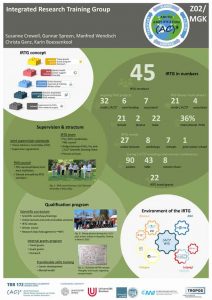
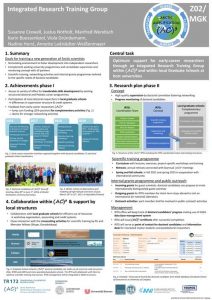
| Phase III Evaluation poster 2023 | Phase II Evaluation poster 2019 | |
 |
 |
Project Members

Project Leader in B03 , B05 , E04 , IRTG
Institute for Geophysics and Meteorology (IGM)
University of Cologne
Pohligstr. 3
50969 Cologne
++49 (0) 221 470 5286
mail:
[email protected]
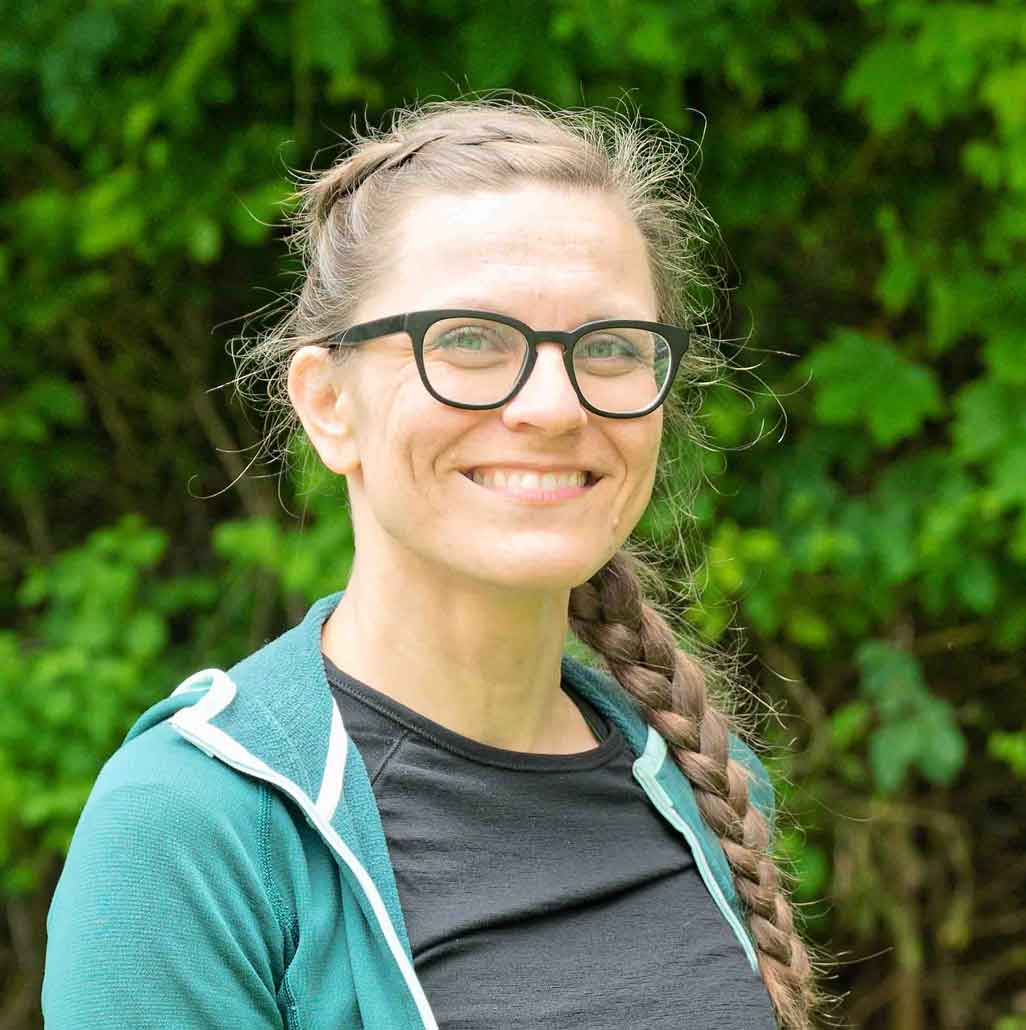
IRTG coordinator in IRTG
Institute for Geophysics and Meteorology (IGM)
University of Cologne
Pohligstr. 3
50969 Cologne
++49 (0) 221 470 4127
mail:
[email protected]


 .
.