
Project Leaders: Dörthe Handorf, Christoph Jacobi, Johannes Quaas , (former PL: Markus Rex)



In phase II of (AC)³, atmospheric energy transports into the Arctic and dynamical mechanisms of Arctic midlatitude linkages have been analyzed with respect to the impact of the ocean-atmosphere background state, changing radiative forcing, and representation of stratospheric processes. New machine-learning analysis tools have been developed. We detected preferred pathways of energy transports during synoptic events, and unraveled the impact of changing sea ice concentration (SIC) and sea surface temperatures on Arctic-midlatitude linkages including changes in temperature extremes. We improved the representation of stratospheric waves in the ICOsahedral Non-hydrostatic (ICON) model and their effect of the polar vortex and stratospheric-tropospheric coupling. But there are still large uncertainties about Arctic-midlatitude linkages, with large spreads in climate simulations for Arctic climate, Arctic amplification, and feedback processes. Hence, Arctic amplification processes, and connections of Arctic and midlatitude circulation still have to be improved in global climate models to obtain more reliable climate projections, particularly with respect to Arctic amplification and related Arctic-midlatitude linkages. In phase III, we will study the impact of improved parameterizations, developed in phases I and II of (AC)³, on the simulated Arctic climate and related midlatitude climate linkages in the global ICON model.
Hypothesis:
Advanced representations of Arctic processes in a global climate model improve the representation of Arctic-midlatitude linkages.
Specifically we want to answer the following questions:
- How sensitive is the simulated Arctic climate to changes of surface-related and gravity wave parameterizations?
- How does a better representation of Arctic processes in a global climate model impact the representation of Arctic-midlatitude linkages under present day climate?
- Will a better representation of Arctic processes in a global climate model lead to significant changes in Arctic-midlatitude linkages under future climate conditions?
To answer these questions, we will implement improved physical parameterizations of boundary layer turbulence, surface drag, surface albedo, and gravity wave drag developed previously within (AC)³ into the global ICON model; perform sensitivity simulations for present-day and future climate conditions with the ICON standard version, and with improved parameterizations; evaluate and quantify dynamical processes of Arctic climate change, Arctic amplification and Arctic-midlatitude linkages exploiting reanalyses and (AC)³ observations by applying the methods developed in project D01 during phases I and II. This work plan relates to all of the strategic questions. We will analyze the contributions of new parameterizations to Arctic amplification (SQ1), quantify the effect on Arctic-midlatitude linkages (SQ2) and analyze their role in the future Arctic amplification evolution (SQ3).
Achievements phase II
- Analysis of the role of horizontal energy transports to synoptic events and LRF.
- Unraveling the impact of changing SIC and SSTs on Arctic-midlatitude linkages including extremes.
- Updated GW representation improves stratospheric circulation in ICON.
- New machine learning methods for circulation pattern detection and analysis.
Achievements phase I
D01 has analysed the horizontal transports of moist static energy into the Arctic using an innovative, self-organising maps algorithm (Mewes and Jacobi, 2019). The impact of Arctic sea-ice decline on the large-scale atmospheric circulation has been analysed in reanalysis data and climate model simulations (Romanowsky et al., 2019). A tropospheric pathway mainly occurs in autumn to early winter and results in more frequent occurrence of blockings over Scandinavia and northern Eurasia. This initiates a stratospheric pathway with enhanced upward propagation of energy to weaken the stratospheric polar vortex. The subsequent downward propagation of these stratospheric circulation anomalies in late winter (Jaiser et al., 2016) contributes to persistent negative North Atlantic Oscillation (NAO) anomalies. An improvement of modelled stratospheric pathway for Arctic-mid-latitude linkages by including interactive stratospheric ozone chemistry into general circulation models was achieved (Romanowsky et al., 2019).
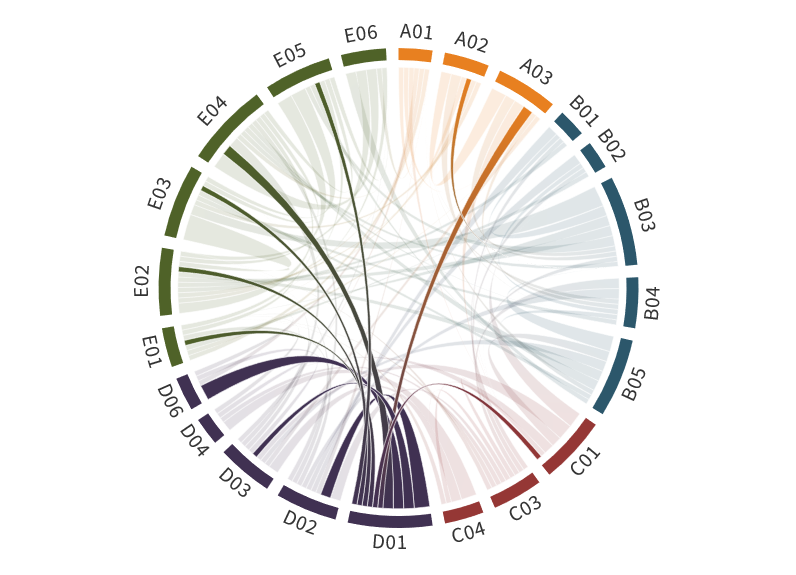
Role within (AC)³
Project Posters
| Phase III Evaluation poster 2023 | Phase II Evaluation poster 2019 | Phase I Evaluation poster 2015 |
 |
 |
 |
Project Members
PhD in D01
Leipzig Institute for Meteorology (LIM)
University of Leipzig
Stephanstr. 3
04103 Leipzig
mail:
[email protected]
Project Leader in A03 , D01 , Z04
Alfred Wegener Institute
Telegrafenberg A45
14473 Potsdam
++49 (0) 331 58174 5204
mail:
[email protected]
Project Leader in D01
Leipzig Institute for Meteorology (LIM)
University of Leipzig
Stephanstr. 3
04103 Leipzig
++49 (0) 341 97 32876
mail:
[email protected]

Project Leader in D01 , E01 , E06 , Z04
Leipzig Institute for Meteorology (LIM)
University of Leipzig
Stephanstr. 3
04103 Leipzig
++49 (0) 341 97 32852
mail:
[email protected]
PhD in D01
Alfred-Wegener-Institute Helmholtz Center for Polar and Marine Research (AWI)
Telegrafenberg A45
14473 Potsdam
mail:
[email protected]
Publications
2026
Mehrdad, S., Marjani, S., Handorf, D., and Jacobi, C. , 2026: Northern Hemisphere stratospheric polar vortex morphology under localized gravity wave forcing: a shape-based classification. Atmos. Chem. Phys., 26(5):3391–3415, doi:10.5194/acp-26-3391-2026
2025
Zhang, X., Vihma, T., Rinke, A., Moore, G. W. K., Tang, H., Äijälä, C., DuVivier, A., Huang, J., Landrum, L., Li, C., Zhang, J., Boisvert, L., Cheng, B., Cohen, J., Handorf, D., Hanna, E., Hartmuth, K., Jonassen, M. O., Luo, Y., Murto, S., Overland, J. E., Parker, C., Perrie, W., Schulz, K., Schweiger, A., Spengler, T., Steele, M., Tung, W., Tyrrell, N., Valkonen, E., Wang, H., Wang, Z., Weijer, W., Wickström, S., Wu, Y., and Zhang, M. , October 2025: Weather and climate extremes in a changing Arctic. Nat. Rev. Earth Environ., doi:10.1038/s43017-025-00724-4
Kumar, A., Karami, K., Jacobi, C., and Mehrdad, S. , August 2025: Exploring the impact of orographic and non-orographic gravity waves on arctic stratospheric polar vortex dynamics and springtime ozone loss. J Atmos. Sol-Terr Phys, doi:10.1016/j.jastp.2025.106538
Müller, J. M., Landgren, O. A., and Handorf, D. , 2025: Summertime Arctic and North Atlantic–Eurasian circulation regimes under climate change. Weather Clim. Dyn., 6(4):1895–1921, doi:10.5194/wcd-6-1895-2025
Mehrdad, S., Marjani, S., Handorf, D., and Jacobi, C. , 2025: Non-zonal gravity wave forcing of the Northern Hemisphere winter circulation and effects on middle atmosphere dynamics. Weather Clim. Dyn., 6(4):1491–1514, doi:10.5194/wcd-6-1491-2025
Kumar, A., Mandal, J., Mehrdad, S., and Jacobi, C. , 2025: A novel approach to predict the arctic stratospheric ozone from stratospheric polar vortex dynamics using explainable machine learning. Sci. Rep., doi:10.1038/s41598-025-24379-9
2024
Mehrdad, S., Handorf, D., Höschel, I., Karami, K., Quaas, J., Dipu, S., and Jacobi, C. , October 2024: Arctic Climate Response to European Radiative Forcing: A Deep Learning Study on Circulation Pattern Changes. Weather Clim. Dyn., 5(4):1223–1268, doi:10.5194/wcd-5-1223-2024
Kuchar, A., Öhlert, M., Eichinger, R., and Jacobi, C. , July 2024: Large-Ensemble Assessment of the Arctic Stratospheric Polar Vortex Morphology and Disruptions. Weather Clim. Dyn., 5(3):895–912, doi:10.5194/wcd-5-895-2024
2023
Köhler, R. H., Jaiser, R., and Handorf, D. , December 2023: How Do Different Pathways Connect the Stratospheric Polar Vortex to Its Tropospheric Precursors? Weather Clim. Dyn., 4(4):1071–1086, doi:10.5194/wcd-4-1071-2023
Linke, O., Quaas, J., Baumer, F., Becker, S., Chylik, J., Dahlke, S., Ehrlich, A., Handorf, D., Jacobi, C., Kalesse-Los, H., Lelli, L., Mehrdad, S., Neggers, R. A. J., Riebold, J., Saavedra Garfias, P., Schnierstein, N., Shupe, M. D., Smith, C., Spreen, G., Verneuil, B., Vinjamuri, K. S., Vountas, M., and Wendisch, M. , September 2023: Constraints on Simulated Past Arctic Amplification and Lapse Rate Feedback from Observations. Atmos. Chem Phys, 23(17):9963–9992, doi:10.5194/acp-23-9963-2023
Jaiser, R., Akperov, M., Timazhev, A., Romanowsky, E., Handorf, D., and Mokhov, I. , September 2023: Linkages between Arctic and Mid-Latitude Weather and Climate: Unraveling the Impact of Changing Sea Ice and Sea Surface Temperatures during Winter. Meteorol. Z., 32(3):173–194, doi:10.1127/metz/2023/1154
Galytska, E., Weigel, K., Handorf, D., Jaiser, R., Köhler, R., Runge, J., and Eyring, V. , September 2023: Evaluating Causal Arctic-Midlatitude Teleconnections in CMIP6. J. Geophys. Res. Atmospheres, 128(17):e2022JD037978, doi:10.1029/2022JD037978
Riebold, J., Richling, A., Ulbrich, U., Rust, H., Semmler, T., and Handorf, D. , July 2023: On the Linkage between Future Arctic Sea Ice Retreat, Euro-Atlantic Circulation Regimes and Temperature Extremes over Europe. Weather Clim. Dyn., 4(3):663–682, doi:10.5194/wcd-4-663-2023
Kirbus, B., Tiedeck, S., Camplani, A., Chylik, J., Crewell, S., Dahlke, S., Ebell, K., Gorodetskaya, I., Griesche, H., Handorf, D., Höschel, I., Lauer, M., Neggers, R., Rückert, J., Shupe, M. D., Spreen, G., Walbröl, A., Wendisch, M., and Rinke, A. , April 2023: Surface Impacts and Associated Mechanisms of a Moisture Intrusion into the Arctic Observed in Mid-April 2020 during MOSAiC. Front. Earth Sci., 11:1147848, doi:10.3389/feart.2023.1147848
Karami, K., Borchert, S., Eichinger, R., Jacobi, C., Kuchar, A., Mehrdad, S., Pisoft, P., and Sacha, P. , April 2023: The Climatology of Elevated Stratopause Events in the UA-ICON Model and the Contribution of Gravity Waves. J. Geophys. Res. Atmospheres, 128(7):e2022JD037907, doi:10.1029/2022JD037907
Karami, K., Garcia, R., Jacobi, C., Richter, J. H., and Tilmes, S. , March 2023: The Holton–Tan Mechanism under Stratospheric Aerosol Intervention. Atmos. Chem Phys, 23(6):3799–3818, doi:10.5194/acp-23-3799-2023
2022
Karami, K., Mehrdad, S., and Jacobi, C. , December 2022: Response of the Resolved Planetary Wave Activity and Amplitude to Turned off Gravity Waves in the UA-ICON General Circulation Model. J Atmos. Sol-Terr Phys, 241:105967, doi:10.1016/j.jastp.2022.105967
Schneider, T., Lüpkes, C., Dorn, W., Chechin, D., Handorf, D., Khosravi, S., Gryanik, V. M., Makhotina, I., and Rinke, A. , January 2022: Sensitivity to Changes in the Surface-layer Turbulence Parameterization for Stable Conditions in Winter: A Case Study with a Regional Climate Model over the Arctic. Atmos. Sci Lett, 23(1):e1066, doi:10.1002/asl.1066
2021
Rinke, A., Cassano, J. J., Cassano, E. N., Jaiser, R., and Handorf, D. , July 2021: Meteorological Conditions during the MOSAiC Expedition. Elem. Sci. Anthr., 9(1):00023, doi:10.1525/elementa.2021.00023
Wendisch, M., Handorf, D., Tegen, I., Neggers, R., and Spreen, G. , March 2021: Glimpsing the Ins and Outs of the Arctic Atmospheric Cauldron. Eos, doi:10.1029/2021EO155959
Köhler, R., Handorf, D., Jaiser, R., Dethloff, K., Zängl, G., Majewski, D., and Rex, M. , March 2021: Improved Circulation in the Northern Hemisphere by Adjusting Gravity Wave Drag Parameterizations in Seasonal Experiments With ICON-NWP. Earth Space Sci., 8(3):e2021EA001676, doi:10.1029/2021EA001676
2020
Mewes, D. and Jacobi, C. , March 2020: Horizontal Temperature Fluxes in the Arctic in CMIP5 Model Results Analyzed with Self-Organizing Maps. Atmosphere, 11(3):251, doi:10.3390/atmos11030251
Vihma, T., Graversen, R., Chen, L., Handorf, D., Skific, N., Francis, J. A., Tyrrell, N., Hall, R., Hanna, E., Uotila, P., Dethloff, K., Karpechko, A. Y., Björnsson, H., and Overland, J. E. , January 2020: Effects of the Tropospheric Large-scale Circulation on European Winter Temperatures during the Period of Amplified Arctic Warming. Int. J. Climatol., 40(1):509–529, doi:10.1002/joc.6225
2019
Dethloff, K., Handorf, D., Jaiser, R., and Rinke, A. , November 2019: Kältere Winter durch abnehmendes arktisches Meereis: Klima- und Zirkulationsänderungen in der Arktis. Phys. Unserer Zeit, 50(6):290–297, doi:10.1002/piuz.201901547
Rinke, A., Knudsen, E. M., Mewes, D., Dorn, W., Handorf, D., Dethloff, K., and Moore, J. C. , June 2019: Arctic Summer Sea Ice Melt and Related Atmospheric Conditions in Coupled Regional Climate Model Simulations and Observations. J. Geophys. Res. Atmospheres, 124(12):6027–6039, doi:10.1029/2018JD030207
Romanowsky, E., Handorf, D., Jaiser, R., Wohltmann, I., Dorn, W., Ukita, J., Cohen, J., Dethloff, K., and Rex, M. , May 2019: The Role of Stratospheric Ozone for Arctic-midlatitude Linkages. Sci. Rep., 9(1):7962, doi:10.1038/s41598-019-43823-1
Mewes, D. and Jacobi, C. , March 2019: Heat Transport Pathways into the Arctic and Their Connections to Surface Air Temperatures. Atmos. Chem Phys, 19(6):3927–3937, doi:10.5194/acp-19-3927-2019
Dethloff, K., Handorf, D., Jaiser, R., Rinke, A., and Klinghammer, P. , January 2019: Dynamical Mechanisms of Arctic Amplification. Ann. N. Y. Acad. Sci., 1436(1):184–194, doi:10.1111/nyas.13698
2018
Kreyling, D., Wohltmann, I., Lehmann, R., and Rex, M. , March 2018: The Extrapolar SWIFT Model (Version 1.0): Fast Stratospheric Ozone Chemistry for Global Climate Models. Geosci. Model Dev., 11(2):753–769, doi:10.5194/gmd-11-753-2018
2017
Jacobi, C., Ermakova, T., Mewes, D., and Pogoreltsev, A. I. , September 2017: El Niño Influence on the Mesosphere/Lower Thermosphere Circulation at Midlatitudes as Seen by a VHF Meteor Radar at Collm (51.3 \textasciicircum \circ N, 13 \textasciicircum \circ E). Adv. Radio Sci., 15:199–206, doi:10.5194/ars-15-199-2017
Stober, G., Matthias, V., Jacobi, C., Wilhelm, S., Höffner, J., and Chau, J. L. , June 2017: Exceptionally Strong Summer-like Zonal Wind Reversal in the Upper Mesosphere during Winter 2015/16. Ann. Geophys., 35(3):711–720, doi:10.5194/angeo-35-711-2017
Wendisch, M., Brückner, M., Burrows, J., Crewell, S., Dethloff, K., Ebell, K., Lüpkes, C., Macke, A., Notholt, J., Quaas, J., Rinke, A., and Tegen, I. , January 2017: Understanding Causes and Effects of Rapid Warming in the Arctic. Eos, doi:10.1029/2017EO064803


 .
.